
How Unity Flow Reactors Support Chemical and Pharmaceutical Industries
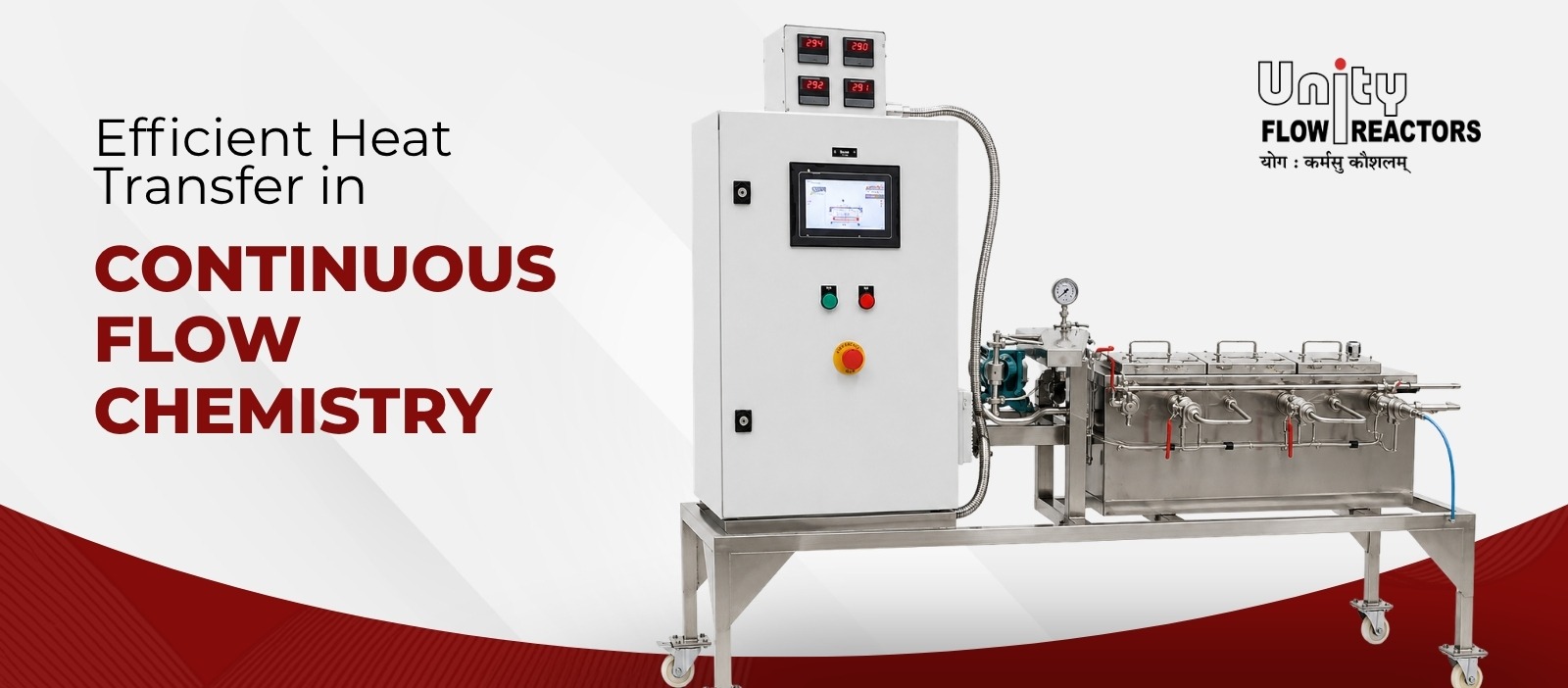
Good chemistry is not just about what reacts. It is about how it reacts.
Industrial chemical processes have long depended on getting three things right: heat, mixing, and control. Get them wrong and the consequences range from poor yield to serious safety incidents. Flow chemistry addresses all three with a level of precision that traditional batch processing simply cannot match.
For process engineers and production managers evaluating reactor technology, understanding how flow chemistry works at a fundamental level is the starting point for every smart upgrade decision.
The Core Principle: Reaction in Motion
In continuous flow chemistry, reactants do not sit in a vessel waiting for the reaction to complete. They move. Reagents are pumped through a defined channel, tube, or reactor chamber. Reaction occurs as the material travels through the system. The product exits continuously at the other end.
This motion changes the physics of the reaction environment entirely. The reactor geometry, flow rate, and residence time are all engineered to deliver exactly the reaction conditions required. Nothing is left to chance.
Heat Transfer: Precise, Efficient, and Scalable
Heat management is one of the most critical challenges in chemical manufacturing. Exothermic reactions generate heat rapidly. If that heat is not removed efficiently, temperatures spike. Selectivity drops. Byproducts form. In worst cases, runaway reactions occur.
Flow reactors solve this through geometry. The high surface area to volume ratio of a flow reactor channel allows heat to be transferred quickly and consistently. The reactor wall is always close to the reaction mixture. This means heating or cooling happens faster and more uniformly than in a large batch vessel.
In continuous flow chemistry, temperature control is not reactive. It is built into the system design. Heat exchangers are integrated directly into the reactor architecture. The result is stable, repeatable thermal management across every production run.
This is particularly important for nitration reactions, highly exothermic oxidations, and other thermally sensitive chemistries where precise temperature profiles determine product quality.
Mixing: Uniform, Controlled, and Reproducible
Mixing quality determines reaction efficiency. Poor mixing leads to concentration gradients. Concentration gradients lead to side reactions and inconsistent product quality.
In a batch reactor, mixing depends on agitator speed, vessel geometry, and fluid viscosity. These variables interact in complex ways and become harder to control as vessel size increases.
In a flow reactor, mixing occurs within a defined, engineered space. Reactants meet at precise points. Turbulent flow, structured channels, or static mixing elements ensure that contact between reagents is consistent from the first litre to the thousandth.
This is where microreactor flow chemistry offers a distinct advantage at the research and pilot scale. Microreactors create extremely high mixing efficiency in small volumes. Reactions that are difficult to control in batch can be studied and optimised safely in a microreactor before being scaled to full production flow systems.
Control: Real Time, Reliable, and Repeatable
Control is where flow chemistry truly separates itself from batch processing.
In a batch system, conditions evolve. Temperature, concentration, and pH all shift as the reaction progresses. Operators monitor and adjust. Variation is inherent.
In a continuous flow system, conditions are set and maintained. Flow rates are precise. The reactor volume and pump speed fixes residence time. Sensors monitor conditions in real time. Deviations are detected and corrected immediately.
For regulated industries, this level of process control translates directly into documentation, traceability, and batch record integrity. The chemistry is reproducible not just in theory but in practice, run after run.
Why This Matters for Industrial Applications
The principles of heat transfer, mixing, and control are not abstract engineering concepts. They determine whether a process is safe to run at scale, whether the product meets specification, and whether the facility operates efficiently.
Flow chemistry enables manufacturers to work with aggressive reaction conditions, compress reaction times, reduce solvent volumes, and improve atom efficiency. These are not incremental improvements. They represent a meaningful shift in how chemical production is designed and operated.
Engineer Your Process With Unity Flow Reactors
Understanding the science is step one. Translating it into a production-ready system requires engineering expertise and domain experience. Unity Flow Reactors, with over 35 years of process engineering excellence based in Vadodara, Gujarat, designs continuous flow reactor systems tailored to your specific chemistry and production demands. From heat exchanger integrated reactor designs to precision mixing configurations, every system is built to perform. Reach out to the Unity Flow Reactors engineering team today and take the first step toward a safer, more efficient, and more controlled production process.
Flow chemistry is a method where reactants continuously move through a reactor system rather than being processed in closed vessels. It offers tighter control over heat, mixing, and residence time, resulting in safer, more consistent, and more efficient chemical production compared to batch methods.
A flow reactor’s high surface area to volume ratio allows heat to be transferred rapidly and uniformly. Integrated heat exchangers maintain stable temperatures throughout the reaction, preventing the thermal spikes and runaway risks commonly associated with large-scale batch reactor operations.
Microreactor flow chemistry uses miniaturised reactor channels to achieve extremely precise mixing and heat control in small volumes. It is primarily used during research, process development, and pilot-scale optimisation before transitioning reactions to full-scale continuous flow production systems.
The pharmaceutical, fine chemical, agrochemical, and speciality chemical industries are the primary beneficiaries. Continuous flow chemistry is especially valuable for hazardous, thermally sensitive, or tightly regulated reactions where reproducibility, safety, and process documentation are critical production requirements.